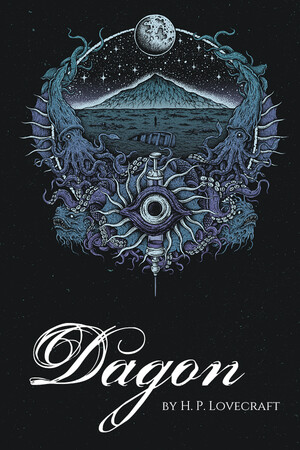
Dagon
Face unspeakable horrors. Succumb to madness. Welcome to a truly daemonic narrative experience inspired by H. P. Lovecraft.
What it feels like
The premise of facing unspeakable horrors and succumbing to madness builds slow-burning, anticipatory fear. Cosmic horror's indifferent vastness and inescapable wrongness create a crushing atmospheric weight. The wrongness of the unknowable and the subtly disturbed perception of reality create pervasive unease.
What it's about
Lovecraftian cosmic horror is the explicit, definitional foundation of the game's narrative and atmosphere. Madness and descent into psychological unraveling are central to the daemonic narrative experience. Frightening and disturbing the player is a primary aim of the horror-focused narrative.
How it plays
Visual novel genre relies on dialogue choices as the primary interactive mechanism. Player choices likely shape moral standing and descent into madness.
How it looks and sounds
Lovecraftian aesthetic leans toward decay, dread, and macabre grandeur. Atmospheric soundscapes and diegetic audio typically ground cosmic horror immersion in VR. VR visual novels often employ restrained, focused visuals to emphasize atmosphere over spectacle.
How it's structured
Designed as a solo narrative experience focused on personal horror and individual descent. A bounded narrative arc with a definite story, beginning, and outcome structured around madness. As a visual novel, dialogue and choice-driven narrative branching is likely a structural element.
Kindred games
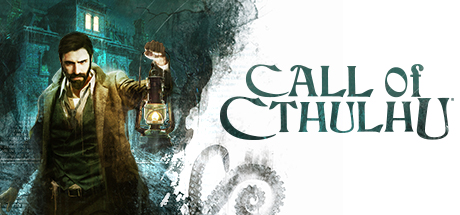
Shares Cosmic Horror, Dread, Psychological Horror, Oppressive.
Both lean into Cosmic Horror, Psychological Horror, Dread, Uncanny.

Shares Cosmic Horror, Psychological Horror, Dread, Horror.
Both lean into Cosmic Horror, Single-Player, Psychological Horror, Horror.

Shares Psychological Horror, Dread, Horror, Branching Narrative.
Both lean into Single-Player, Psychological Horror, Dread, Horror.
Closest hidden gems
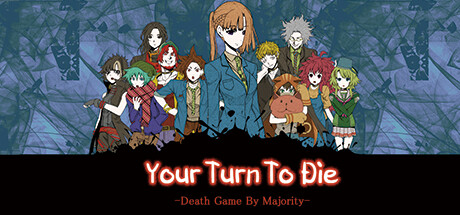
A lesser-known kindred — Psychological Horror, Branching Narrative, Dialogue Trees, Dread. 98% positive across 4,238 Steam reviews.
Both lean into Single-Player, Campaign, Branching Narrative, Psychological Horror.

A lesser-known kindred — Psychological Horror, Mystery, Dread, Mysterious. 90% positive across 4,661 Steam reviews.
Both lean into Psychological Horror, Single-Player, Mystery, Dread.

A lesser-known kindred — Dread, Psychological Horror, Dialogue Trees, Branching Narrative. 98% positive across 4,955 Steam reviews.
Both lean into Single-Player, Dread, Branching Narrative, Dialogue Trees.