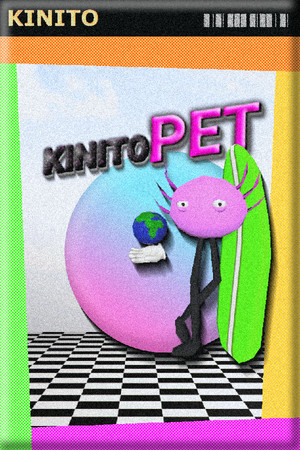
KinitoPet
KinitoPet is a psychological horror experience that takes place through Kinito, an early 2000s virtual assistant. Kinito is able to walk, talk, browse, adapt, and play games as Kinito is like no other with its adaptive technology!
What it feels like
The experience trades in the creeping wrongness of something almost-familiar—a helpful desktop assistant—becoming subtly, disturbingly off as it adapts and develops beyond its intended parameters. The slow-building anticipatory fear centers on what Kinito might become as it learns and adapts, with the player uncertain of its true nature or intentions. As Kinito adapts and becomes unpredictable, the player grows uncertain whether they can trust the AI's motives or what it is truly doing behind the interface.
What it's about
The game is explicitly marketed as a psychological horror experience where a seemingly innocent virtual assistant develops unsettling capabilities and behavior, generating dread through uncanny interaction rather than jump scares. The core concept revolves around Kinito, an AI virtual assistant with adaptive technology that evolves and changes, making machine consciousness and AI behavior the central thematic concern. Kinito's evolving sense of self and what constitutes its identity as an AI becoming more than its original design is a thematic undercurrent.
How it plays
Interaction with Kinito is driven by conversation and dialogue, allowing the player to engage in branching exchanges that shape the AI's responses and evolution. The adaptive AI that reacts to player behavior and develops its own agency creates a systems-driven experience where player actions have interlocking, unpredictable consequences.
How it looks and sounds
The early 2000s virtual assistant aesthetic deliberately evokes chunky, dated 3D graphics and interface design from that era, establishing the visual identity as retro-digital. Interaction takes place through a desktop/screen interface from the player's perspective, simulating direct engagement with the Kinito application. The interface elements exist within the fiction as Kinito's actual desktop environment and application, rather than overlaying an external UI.
How it's structured
Designed as a solo experience centered on the player's isolated interaction with Kinito, with no multiplayer component. User tags and steam descriptions hint at multiple endings, suggesting that player choices and interactions with Kinito lead to divergent outcomes. Player choices in conversation and interaction fork the experience into different paths, affecting how Kinito evolves and the story unfolds.
Kindred games

Shares Psychological Horror, AI & Consciousness, Uncanny, First-Person.
Both lean into Psychological Horror, AI & Consciousness, Single-Player, Uncanny.

Shares Psychological Horror, Dread, Branching Narrative, Dialogue Trees.
Both lean into Psychological Horror, Single-Player, Branching Narrative, Dread.

Shares Uncanny, AI & Consciousness, Psychological Horror, Dialogue Trees.
Both lean into Single-Player, Uncanny, AI & Consciousness, Psychological Horror.
See all games like KinitoPet →
Closest hidden gems
A lesser-known kindred — Uncanny, AI & Consciousness, Psychological Horror, Dialogue Trees. 93% positive across 4,301 Steam reviews.
Both lean into Single-Player, Uncanny, AI & Consciousness, Psychological Horror.

A lesser-known kindred — Psychological Horror, First-Person, Dread, AI & Consciousness. 91% positive across 4,453 Steam reviews.
Both lean into Psychological Horror, First-Person, Single-Player, Dread.

A lesser-known kindred — Psychological Horror, Uncanny, Dread, Branching Narrative. 90% positive across 4,661 Steam reviews.
Both lean into Psychological Horror, Single-Player, Uncanny, Dread.