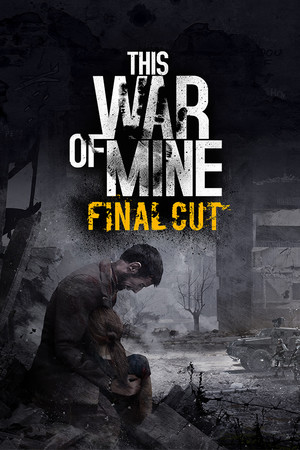
This War of Mine
In This War Of Mine you do not play as an elite soldier, rather a group of civilians trying to survive in a besieged city; struggling with lack of food, medicine and constant danger from snipers and hostile scavengers. The game provides an experience of war seen from an entirely new angle. The pace of This War of Mine is imposed by the day and night cycle. During the day snipers outside stop you from leaving your refuge, so you need to focus on maintaining your hideout: crafting, trading and taking care of your survivors. At night, take one of your civilians on a mission to scavenge through a set of unique locations for items that will help you stay alive. Make life-and-death decisions driven by your conscience. Try to protect everybody from your shelter or sacrifice some of them for longer-term survival. During war, there are no good or bad decisions; there is only survival. The sooner you realize that, the better.
What it feels like
A grave, subdued seriousness pervades the experience—the hush of grief, suffering, and moral compromise under duress. Slow-building anticipatory fear of starvation, injury, or death creates sustained tension and foreboding. A pervasive wistful sadness finds quiet beauty in loss and the fragility of life amid collapse.
What it's about
Enduring a hostile urban environment with scarce resources is the central narrative and mechanical focus. The human toll, trauma, and impossible choices of war from a civilian perspective form the emotional and thematic core. The psychological burden, trauma, and despair of war conditions affect survivor morale and decision-making.
How it plays
Managing hunger, thirst, medicine, and health to keep civilians alive is the defining core loop throughout. Weighty ethical decisions—who to feed, whether to steal, who to risk—shape outcomes and define the moral weight of survival. Scarce food, medicine, and materials must be carefully gathered, budgeted, and allocated to keep survivors alive under constant pressure.
How it looks and sounds
The art style employs hand-drawn, illustrative visuals that emphasize humanity and vulnerability. The visual presentation uses 2.5D side-on perspective for shelter management and mission scenes.
How it's structured
The day/night cycle is the defining structural pillar—day enforces base maintenance, night triggers scavenging missions, creating the core rhythm of play. A bounded narrative arc of civilian survival in a besieged city with a definite progression and ending, despite procedural mission variation. Designed exclusively as a solo experience focused on the player's personal moral and survival struggles.
Kindred games

Shares Survival Against Nature, Resource Management, Somber, Moral Choice.
Both lean into Survival Against Nature, Single-Player, Resource Management, Campaign.

Shares Survival Against Nature, Resource Management, Base Building, Survival Needs.
Both lean into Base Building, Resource Management, Survival Against Nature, Survival Needs.

Shares Survival Against Nature, Resource Management, Moral Choice, Somber.
Both lean into Survival Against Nature, Resource Management, Moral Choice, Somber.
See all games like This War of Mine →
Closest hidden gems

A lesser-known kindred — Base Building, Resource Management, Crafting, Moral Choice. 88% positive across 4,301 Steam reviews.
Both lean into Base Building, Campaign, Resource Management, Crafting.

A lesser-known kindred — Survival Against Nature, Survival Needs, Resource Management, Base Building. 88% positive across 4,765 Steam reviews.
Both lean into Single-Player, Survival Against Nature, Survival Needs, Resource Management.

A lesser-known kindred — Survival Against Nature, Survival Needs, Resource Management, Melancholic. 85% positive across 4,314 Steam reviews.
Both lean into Single-Player, Survival Against Nature, Survival Needs, Resource Management.