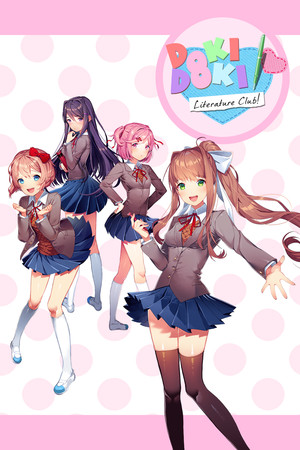
Doki Doki Literature Club!
The Literature Club is full of cute girls! Will you write the way into their heart? This game is not suitable for children or those who are easily disturbed.
What it feels like
The core experience revolves around the subtly wrong—familiar dating sim tropes twisted into something disturbingly off, creating creeping unease as pleasant surfaces crack. A slow-building anticipatory fear permeates the second half as the player senses something terrible approaching, with tension accumulating toward inevitable horror. The game's tone shifts from charming romance to a pervasive, wistful sadness as the reality of the characters and their fates unfolds, finding beauty in loss and decline.
What it's about
Horror rooted in the mind—unreliable reality, paranoia, and psychological violation—is the game's primary mechanism; the subversion of player perception drives the experience. Frightening and disturbing the player is the declared intention; the shift from cute romance to visceral horror and existential dread is fundamental. Confronting death and finitude is inescapable; the fates of the characters and the irreversibility of certain acts drive the horror.
How it plays
Branching conversation choices with characters drive interaction, though the illusion of agency is central to the game's thematic intent. Building bonds and romantic connections with distinct characters is presented as a core system, though it is systematically corrupted and interrogated. Ethical decisions regarding the characters emerge, and the player's complicity in their fates becomes a weighty thematic concern.
How it looks and sounds
Japanese visual novel anime-inspired character design and aesthetics establish the deceptive cute exterior that the game systematically undermines. Adorable, appealing character and UI design are deliberately used to create tonal dissonance with the horrific content that emerges. Audio distortion, glitching, and sound design play a significant role in conveying psychological instability and the breakdown of reality.
How it's structured
The game is designed solely for solo play, with no multiplayer component; the isolated player is essential to the experience of unease and complicity. A bounded, authored story arc unfolds from romantic setup through psychological breakdown to a definite, dark conclusion. While the appearance of choice is presented, the narrative ultimately converges on predetermined outcomes; player agency is illusory, reinforcing the psychological horror.
Kindred games
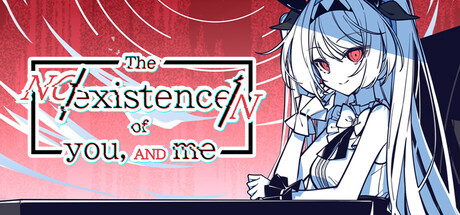
Shares Psychological Horror, Dialogue Trees, Branching Narrative, Anime Style.
Both lean into Single-Player, Psychological Horror, Dialogue Trees, Branching Narrative.

Shares Psychological Horror, Horror, Dread, Dialogue Trees.
Both lean into Single-Player, Psychological Horror, Horror, Dread.

Shares Psychological Horror, Uncanny, Horror, Dread.
Both lean into Psychological Horror, Single-Player, Campaign, Uncanny.
See all games like Doki Doki Literature Club! →
Closest hidden gems
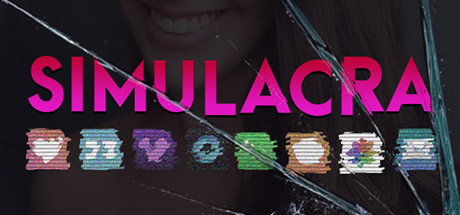
A lesser-known kindred — Psychological Horror, Dread, Mysterious, Uncanny. 90% positive across 4,661 Steam reviews.
Both lean into Single-Player, Psychological Horror, Mysterious, Dread.
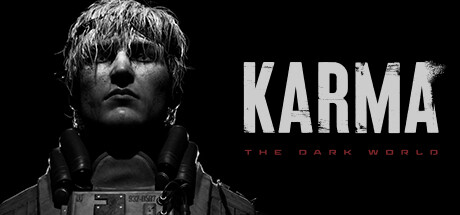
A lesser-known kindred — Psychological Horror, Mysterious, Dread, First-Person. 91% positive across 4,453 Steam reviews.
Both lean into Psychological Horror, Single-Player, Mysterious, Dread.
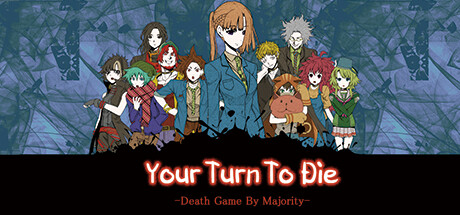
A lesser-known kindred — Psychological Horror, Dialogue Trees, Branching Narrative, Horror. 98% positive across 4,238 Steam reviews.
Both lean into Single-Player, Campaign, Psychological Horror, Dialogue Trees.