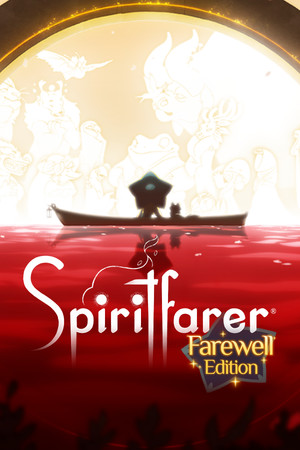
Spiritfarer
Spiritfarer is a cozy management game about dying. You play Stella, ferrymaster to the deceased, a Spiritfarer. Build a boat to explore the world, then befriend and care for spirits before finally releasing them into the afterlife. Farm, mine, fish, harvest, cook, and craft your way across mystical seas. Join the adventure as Daffodil the cat, in two-player cooperative play. Spend relaxing quality time with your spirit passengers, create lasting memories, and, ultimately, learn how to say goodbye to your cherished friends. What will you leave behind?
What it feels like
The entire game is explicitly designed as a cozy management experience, prioritizing gentleness, comfort, and low-stakes gameplay over tension or challenge. The core emotional register is one of caring warmth—building relationships with spirits, spending quality time with them, and treating their stories with gentle affection. Beneath the cozy surface lies a pervasive wistful sadness about loss, decay, and the beauty found in saying goodbye to cherished companions.
What it's about
The entire premise centers on ferrying spirits into the afterlife—a journey through and toward death and what lies beyond is definitional to the experience. Confronting death and finitude is the central subject; the game asks players to reflect on saying goodbye and the acceptance of life's end. The experience of mourning and living with loss—learning to let go of cherished spirits—anchors the emotional narrative throughout.
How it plays
Building bonds and emotional connections with spirit characters—learning their stories, caring for them, and creating memories—is absolutely central. Gathering, budgeting, and spending resources like wood, stone, and materials under gentle pressure is a core loop throughout the game. Constructing and expanding the boat (home base) through gathering and crafting is a major progression system and core loop.
How it looks and sounds
The game features distinctive frame-by-frame hand-drawn animation and illustrated 2D art as its primary visual identity. Rounded, adorable character design—including the companion cat Daffodil—contributes significantly to the warm, accessible aesthetic. The art style evokes soft, watercolor-like painting with gentle color washes and organic brushwork throughout the world.
How it's structured
A bounded, authored narrative arc with a beginning, middle, and definite end—releasing all spirits concludes the journey. Although co-op is supported, the game is designed to work fully as a single-player experience, with solo play being the default mode. While completable in longer sessions, the game's relaxing pace and modular nature allow for comfortable short play sessions without time pressure.
Kindred games

Shares Cozy, Tender, Hand-Drawn 2D, Crafting.
Both lean into Cozy, Tender, Hand-Drawn 2D, Single-Player.

Shares Death & Afterlife, Mortality, Melancholic, Tender.
Both lean into Death & Afterlife, Mortality, Campaign, Melancholic.

Shares Hand-Drawn 2D, Melancholic, Grief & Loss, Tender.
Both lean into Hand-Drawn 2D, Melancholic, Grief & Loss, Single-Player.
See all games like Spiritfarer →
Closest hidden gems

A lesser-known kindred — Hand-Drawn 2D, Tender, Grief & Loss, Melancholic. 95% positive across 4,380 Steam reviews.
Both lean into Hand-Drawn 2D, Tender, Grief & Loss, Single-Player.

A lesser-known kindred — Grief & Loss, Melancholic, Tender, Hand-Drawn 2D. 87% positive across 4,685 Steam reviews.
Both lean into Grief & Loss, Melancholic, Tender, Single-Player.
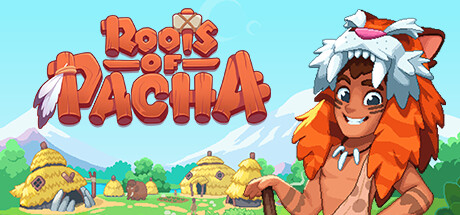
A lesser-known kindred — Cozy, Farming, Relationship Sim, Cute. 94% positive across 4,488 Steam reviews.
Both lean into Cozy, Farming, Relationship Sim, Cute.