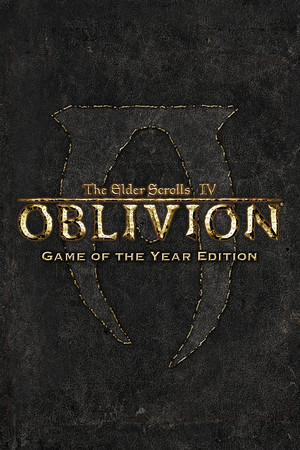
The Elder Scrolls IV: Oblivion
The Elder Scrolls IV: Oblivion, the fourth game in the Elder Scrolls story, is set within the province of Cyrodiil, the heartland and Imperial capital of Tamriel. Emperor Uriel Septim VII is assassinated in flight from his own palace, but just before he dies he passes on to you the mystic Amulet of Kings. The adventure proper begins with the quest to find Uriel's lost and illegitimate son who is the only heir to the throne. In a world where the forces of darkness seek their ultimate dominion over the ranks of man and mer alike, you alone stand between the future of Tamriel and the gates of Oblivion.
What it feels like
The story and world-building are presented with sincere, unironic heartfelt-ness despite campy dialogue at times. Secrets, hidden lore, and enigmatic lore fragments pull the player to explore and piece together the world's history.
What it's about
An epic secondary world of magic, gods, daedra, and a world-threatening apocalypse is the central setting. A classic hero's journey to prevent daedric invasion and find the rightful heir drives the main narrative.
How it plays
Deep stat and skill combinations enable theorycrafting with attributes, magic schools, and gear combinations. Close-quarters sword, axe, and hand-to-hand combat is a core interaction mode alongside magic. Players define a character class at the start, establishing roles and initial skill affinities.
How it looks and sounds
The default perspective places the player's eye directly in the character's head, defining the core immersion of the experience. An expansive orchestral score sweeps across the game, scored by Jeremy Soule. High-fidelity 3D rendering aims for visual realism, though stylization and age show limitations.
How it's structured
A vast, seamlessly explorable province of Cyrodiil forms the core experience, allowing players to tackle content in largely non-linear order. Designed exclusively for solo play with no multiplayer component. The world is traversed without loading screens between major areas, maintaining immersion across the continuous landscape.
Kindred games
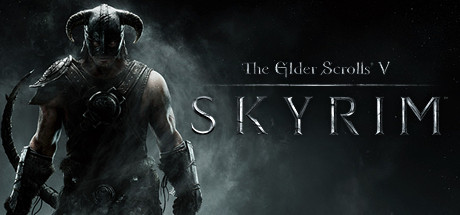
Shares Open World, High Fantasy, Seamless World, Handcrafted World.
Both lean into Open World, High Fantasy, Seamless World, Single-Player.
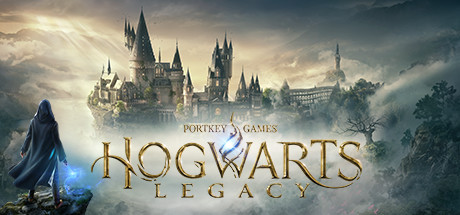
Shares Open World, High Fantasy, Seamless World, Handcrafted World.
Both lean into Open World, Single-Player, High Fantasy, Seamless World.

Shares Open World, High Fantasy, Handcrafted World, Melee Combat.
Both lean into Single-Player, Open World, High Fantasy, Handcrafted World.
See all games like The Elder Scrolls IV: Oblivion →
Closest hidden gems
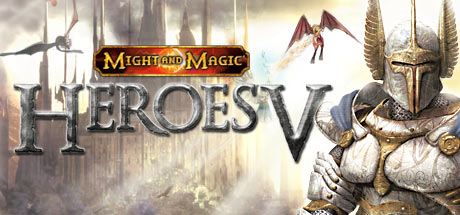
A lesser-known kindred — High Fantasy, Handcrafted World, Class System, Heroic Quest. 88% positive across 4,251 Steam reviews.
Both lean into High Fantasy, Campaign, Handcrafted World, Class System.
A lesser-known kindred — High Fantasy, Handcrafted World, Character Builds, Resource Management. 88% positive across 4,301 Steam reviews.
Both lean into High Fantasy, Campaign, Handcrafted World, Character Builds.

A lesser-known kindred — Nonlinear Progression, High Fantasy, Handcrafted World, Resource Management. 86% positive across 4,627 Steam reviews.
Both lean into Single-Player, Nonlinear Progression, High Fantasy, Handcrafted World.