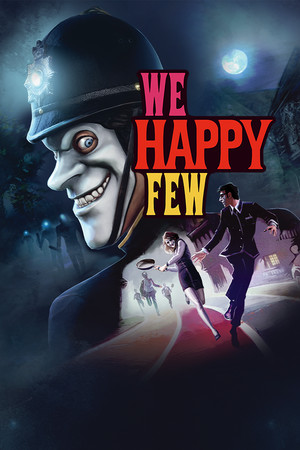
We Happy Few
We Happy Few is the tale of a plucky bunch of moderately terrible people trying to escape from a lifetime of cheerful denial. Set in a drug-fuelled, retrofuturistic city in an alternative 1960s England, you'll have to blend in with its other inhabitants, who don't take kindly to people who don't abide by their not-so-normal rules.
What it feels like
A crushing, suffocating atmosphere of forced cheerfulness and surveillance creates constant pressure on the player. The almost-normal 1960s setting twisted into wrongness via Joy-obsession creates creeping discomfort. A pervasive sadness underlies the game's exploration of lives trapped in denial and false happiness.
What it's about
An oppressive, drug-fueled society obsessed with enforced Joy defines the setting and atmosphere throughout. The horror stems from a warped reality where citizens enforce delusion and conformity, creating paranoia and unease rather than gore. Set in an alternative 1960s England that diverged into a drug-fueled dystopia.
How it plays
Avoiding detection and blending in with conformist inhabitants is a core survival strategy throughout play. Gathering materials and crafting items supports survival and escape mechanics. Managing limited resources like Joy pills and crafting materials under pressure is a core survival loop.
How it looks and sounds
A stylized retrofuturistic 1960s aesthetic with deliberate period design choices. The game employs first-person perspective to immerse the player in the world's oppressive atmosphere.
How it's structured
A large continuous retrofuturistic city is explorable in a largely player-chosen order with multiple escape routes. Designed as a solo experience with no multiplayer component. The world uses procedural generation to vary layouts and encounters across playthroughs.
Kindred games
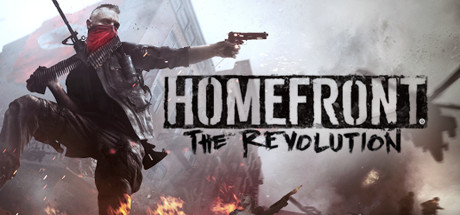
Shares Dystopian, Open World, Stealth, Oppressive.
Both lean into Dystopian, Open World, Stealth, Oppressive.

Shares Psychological Horror, Oppressive, Open World, Uncanny.
Both lean into Single-Player, Oppressive, Psychological Horror, Open World.
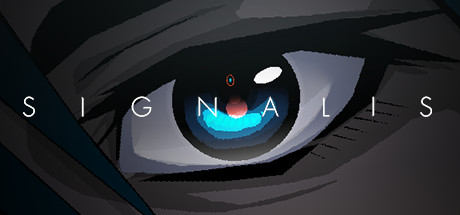
Shares Dystopian, Psychological Horror, Retro 3D, Uncanny.
Both lean into Dystopian, Single-Player, Psychological Horror, Retro 3D.
See all games like We Happy Few →
Closest hidden gems
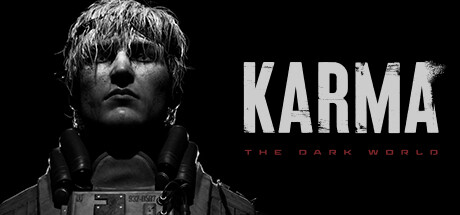
A lesser-known kindred — Psychological Horror, Dystopian, First-Person, Uncanny. 91% positive across 4,453 Steam reviews.
Both lean into Psychological Horror, Dystopian, First-Person, Single-Player.
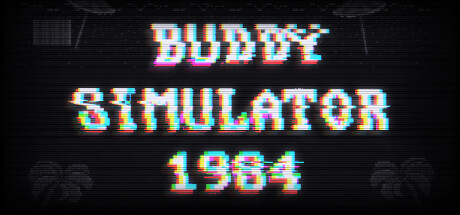
A lesser-known kindred — Psychological Horror, Uncanny, Identity & Self, Melancholic. 93% positive across 4,301 Steam reviews.
Both lean into Single-Player, Uncanny, Psychological Horror, Identity & Self.

A lesser-known kindred — Stealth, Open World, Melee Combat. 90% positive across 4,775 Steam reviews.
Both lean into Stealth, Open World, Melee Combat, Single-Player.