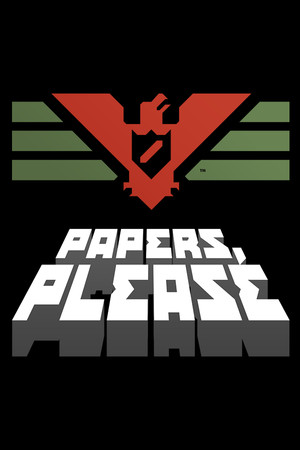
Papers, Please
The communist state of Arstotzka has just ended a 6-year war with neighboring Kolechia and reclaimed its rightful half of the border town, Grestin. Your job as immigration inspector is to control the flow of people entering the Arstotzkan side of Grestin from Kolechia. Among the throngs of immigrants and visitors looking for work are hidden smugglers, spies, and terrorists. Using only the documents provided by travelers and the Ministry of Admission's primitive inspect, search, and fingerprint systems you must decide who can enter Arstotzka and who will be turned away or arrested.
What it feels like
The state's bureaucratic pressure, escalating quotas, fines, and family welfare threats create a crushing, suffocating atmosphere throughout. Sustained edge-of-seat pressure where detecting a spy or smuggler feels imminent, and a single wrong decision costs resources and family welfare. A cold hopelessness pervades—the player struggles to support their family while the state becomes increasingly authoritarian and ruthless.
What it's about
Arstotzka is an oppressive post-war communist state with escalating surveillance, quotas, and moral corruption as central subject. Factions, smuggling networks, and political subtext weave through traveler encounters; the player navigates between serving the state and personal conscience. Hidden agendas, spies, and smugglers form a conspiracy the player gradually uncovers through careful document inspection and traveler stories.
How it plays
Core interaction model—clicking hotspots to examine documents, use tools, and make inspection decisions drives the entire experience. Conversations with travelers branch based on document validity and player judgment, opening or closing entry based on choices. Player must detect forged documents and inconsistencies through careful observation—a form of stats-gated success based on attention and learning rules.
How it looks and sounds
Deliberately low-resolution pixel visuals define the aesthetic and retro atmosphere. Interface elements—stamps, documents, fingerprinting systems—exist as in-world tools rather than overlays, immersing the player in the border booth.
How it's structured
Designed entirely for solo play; no multiplayer component. A bounded story arc with escalating stakes, a family subplot, and a definite ending shaped by player choices and morality. Player decisions—accepting bribes, favoring factions, separating families—lead to meaningfully different endings and personal consequences.
Kindred games
Shares Dystopian, Point-and-Click, Political Intrigue, Dialogue Trees.
Both lean into Single-Player, Dystopian, Point-and-Click, Political Intrigue.

Shares Point-and-Click, Dystopian, Dialogue Trees, Multiple Endings.
Both lean into Single-Player, Point-and-Click, Dystopian, Dialogue Trees.

Shares Political Intrigue, Dialogue Trees, Tense, Dystopian.
Both lean into Single-Player, Campaign, Dialogue Trees, Political Intrigue.
See all games like Papers, Please →
Closest hidden gems
A lesser-known kindred — Point-and-Click, Skill Checks, Dialogue Trees, Tense. 89% positive across 4,523 Steam reviews.
Both lean into Point-and-Click, Single-Player, Skill Checks, Dialogue Trees.

A lesser-known kindred — Tense, Bleak, Political Intrigue, Resource Management. 87% positive across 4,314 Steam reviews.
Both lean into Tense, Bleak, Single-Player, Political Intrigue.

A lesser-known kindred — Point-and-Click, Tense, Dialogue Trees, Conspiracy. 98% positive across 4,593 Steam reviews.
Both lean into Point-and-Click, Single-Player, Campaign, Tense.