
Deus Ex: Human Revolution
In Deus Ex: Human Revolution you play Adam Jensen, a security specialist, handpicked to oversee the defense of one of America's most experimental biotechnology firms. But when a black ops team breaks in and kills the scientists you were hired to protect, everything you thought you knew about your job changes. At a time when scientific advancements are routinely turning athletes, soldiers and spies into super-enhanced beings, someone is working very hard to ensure mankind's evolution follows a particular path. You need to discover why - because the decisions you take and the choices you make will be the only things that can determine mankind's future.
What it feels like
Sustained edge-of-seat pressure throughout missions where detection or miscalculation can quickly escalate into danger. A pervasive wistful sadness colors Jensen's isolation, the loss of those he failed to protect, and doubts about his own humanity.
What it's about
Human augmentation, body modification, and the boundaries of what it means to remain human are the narrative and thematic core. A.I. consciousness, machine sentience, and what defines humanity are recurring thematic pillars beneath the augmentation conflict. The fiction directly interrogates what technological enhancement does to identity, choice, and the human condition.
How it plays
Core to Deus Ex's design philosophy: interlocking systems permit multiple valid solutions to objectives through stealth, hacking, combat, dialogue, and lateral thinking. Avoiding detection via shadows and patrol awareness is a major viable path through missions, rewarded and encouraged as much as direct combat. Branching conversation choices and persuasion gates key information and can open alternate routes, making dialogue a core interaction system.
How it looks and sounds
The game is experienced directly through Adam Jensen's eyes, grounding the immersive-sim perspective. Interface elements like augmentation displays and hacking overlays exist within the fiction rather than as pure HUD overlay.
How it's structured
Within each hub, the player chooses mission order and approach, with multiple valid solutions rewarded equally. Dialogue and moral choices fork the story into meaningfully different outcomes, culminating in distinct endings. Several large explorable hubs (Detroit, Hengsha) are entered discretely, each with lateral mission structure and optional exploration.
Kindred games

Shares First-Person, Immersive Sim, Transhumanism, Stealth.
Both lean into First-Person, Immersive Sim, Transhumanism, Stealth.
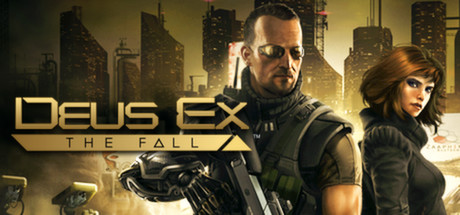
Shares First-Person, Immersive Sim, Stealth, Cyberpunk.
Both lean into First-Person, Immersive Sim, Cyberpunk, Stealth.

Shares First-Person, Immersive Sim, Dialogue Trees, Nonlinear Progression.
Both lean into First-Person, Immersive Sim, Dialogue Trees, Cyberpunk.
See all games like Deus Ex: Human Revolution →
Closest hidden gems
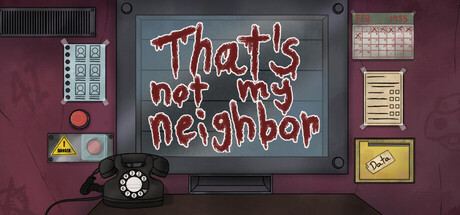
A lesser-known kindred — Skill Checks, Identity & Self, Dialogue Trees, Tense. 89% positive across 4,523 Steam reviews.
Both lean into Skill Checks, Identity & Self, Dialogue Trees, Tense.

A lesser-known kindred — Branching Narrative, Dialogue Trees, Moral Choice, Tense. 90% positive across 4,338 Steam reviews.
Both lean into Branching Narrative, Dialogue Trees, Moral Choice, Tense.

A lesser-known kindred — Branching Narrative, Dialogue Trees, Moral Choice, Multiple Endings. 98% positive across 4,238 Steam reviews.
Both lean into Branching Narrative, Dialogue Trees, Moral Choice, Multiple Endings.