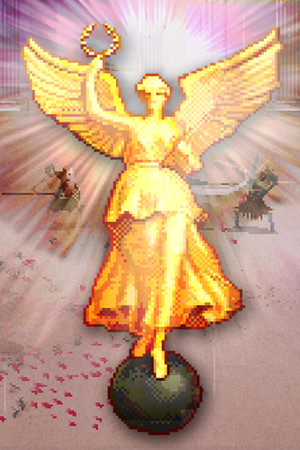
Domina
Domina is a Gladiator management game. The graphics are definitely stylish (a type of pixel art very popular at the time) and the music mixes modern rhythms with ancient sounds in an exceptional way. The gaming system is based on limited time and resources. Each day runs rather quickly and the player can play only a few activities. Training your fighters is essential, as is winning in the arena and obtaining prizes and resources that will allow us to better equip our gladiators and obtain favors from the authorities. The fights are always risky because no result is perfectly guaranteed and losing the best fighters is a tragedy from which you recover only with great difficulty, especially when you are defeated in fights between teams of gladiators. Over time their ludus will grow in celebrity (in case of success) and we can compete with increasingly complex challenges, including participation in tournaments in various parts of Italy of increasing difficulty against opponents. Finally, there are the touches of class as gladiators who get drunk in the arena (if you insist on rewarding them with wine during training), weapons launched by the public to help a fighter, severed limbs and the ability to post on facebook and twitter replays duels. But Domina also impresses with a different aspect from that of mere gameplay or production values. Domina is in fact a title designed to be played in a stream and offers several moments of meaningful interaction with the spectators. First of all, once the Twitch mode is activated, the game collects the names of the stream viewers and uses them for the various gladiators that the streamer manages during the game; both the first batch of fighters and all subsequent new arrivals will be identifiable as the stream viewers. Already this, by itself, allows Domina to acquire a new level of interaction with the public and, therefore, of entertainment. The viewers follow the story of their character, require training, new equipment and invoke the use in the arena. As has already happened in an unstructured way in games like X-Com (the streamer created the characters in the image and request of the viewers), so it happens in a structured and automatic way in Domina. But that is not all. In Domina the viewers vote in the various multi-choice events proposed by the game using a mechanism similar to other 'stream based' games. And then you enter the arena and the fun is multiplied because not only spectators can participate by launching incitements and insults (thus determining other game statistics), but, in case a gladiator surrenders without being killed, they can vote for death or life through the classic thumb up / down.
What it feels like
Arena outcomes are never guaranteed despite preparation, creating sustained pressure and risk with each fight and potential for devastating losses. Social media sharing, drunk gladiators, crowd interaction, and streamer engagement create moments of mischievous, experimental fun alongside the management tension. Social sharing, crowd interaction, and the spectacle-focused design create moments of high-energy entertainment and delight in the arena's drama.
What it's about
Grounded in ancient Roman gladiatorial culture, tournaments across Italy, and period-appropriate aesthetics. Managing a ludus involves acquiring favors from authorities and navigating power structures to advance, with gladiator welfare sometimes sacrificed for gain.
How it plays
Core gameplay revolves around assembling, training, and managing a roster of gladiators with distinct needs and development, much like a tactical squad. Limited daily time and scarce resources (currency, equipment, favors) must be carefully budgeted to improve fighters and expand the ludus. Arena fights are not directly controlled by the player but rather execute based on fighter stats and training, with outcomes influenced by preparation rather than moment-to-moment input.
How it looks and sounds
Stylish pixel art is a defining visual element explicitly praised in the summary as popular to its era. Music described as mixing modern rhythms with ancient sounds in an exceptional way, suggesting orchestral or hybrid scoring approach. Twitch integration embeds viewer names and votes directly into the fiction (gladiators named after streamers, crowd voting on mercy), blurring game and spectacle.
How it's structured
A bounded progression arc from managing a small ludus through growing in celebrity and competing in tournaments across Italy with escalating challenges. Persistent improvements to the ludus, equipment, and reputation accumulate across fights, enabling access to harder content. Each arena fight can result in significant loss that forces recovery and rebuilding, creating discrete challenges with stakes between them.
Kindred games

Shares Party Management, Permadeath, Resource Management, Tense.
Both lean into Party Management, Permadeath, Resource Management, Campaign.
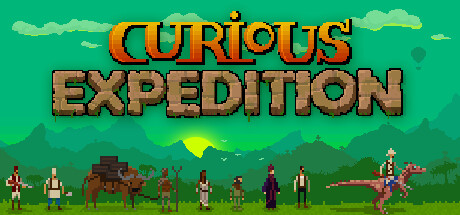
Shares Resource Management, Party Management, Run-Based, Pixel Art.
Both lean into Resource Management, Party Management, Run-Based, Historical.
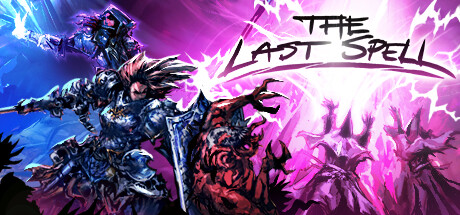
Shares Party Management, Resource Management, Tense, Run-Based.
Both lean into Party Management, Resource Management, Campaign, Tense.
Closest hidden gems
A lesser-known kindred — Resource Management, Party Management, Run-Based, Pixel Art. 91% positive across 4,486 Steam reviews.
Both lean into Resource Management, Party Management, Run-Based, Historical.

A lesser-known kindred — Resource Management, Run-Based, Permadeath, Pixel Art. 86% positive across 4,514 Steam reviews.
Both lean into Resource Management, Run-Based, Permadeath, Pixel Art.

A lesser-known kindred — Historical, Resource Management, Party Management, Tense. 87% positive across 4,452 Steam reviews.
Both lean into Historical, Resource Management, Party Management, Tense.