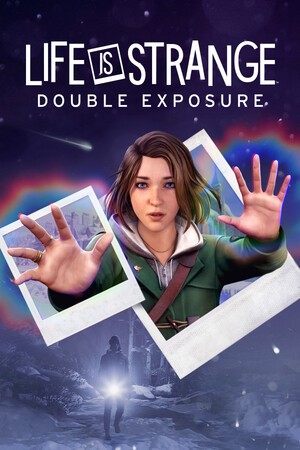
Life is Strange: Double Exposure
Max Caulfield, photographer-in-residence at the prestigious Caledon University, discovers her closest new friend Safi dead in the snow. Murdered. To save her, Max tries to Rewind time – a power she’s not used in years… Instead, Max opens the way to a parallel timeline where Safi is still alive and still in danger! Max realizes the killer will soon strike again – in both versions of reality. Only Max can Shift between the two parallel timelines to solve and prevent the same murder.
What it feels like
An enigmatic pull of secrets half-glimpsed drives the investigation; answers are gradually revealed. The race against a killer and urgency to prevent Safi's death in both timelines creates sustained pressure and edge-of-seat stakes. Sincere, unironic emotional beats—particularly around Max's relationships and the stakes of saving Safi.
What it's about
Unraveling a central murder mystery and discovering the killer's identity structures the entire experience. Time-shifting between parallel realities is a supernatural power central to the premise and mechanics. Max's bond with Safi and the emotional weight of saving her closest friend anchors the narrative.
How it plays
Shifting between parallel timelines is the core mechanic enabling puzzle-solving and narrative progression. Branching conversation choices drive interaction, relationships, and story outcomes throughout the experience. Weighty ethical decisions regarding how to handle the murder investigation and protect Safi shape the narrative.
How it looks and sounds
The camera follows Max from behind or over the shoulder as she navigates environments and investigates. Full voice cast throughout dialogue and narrative sequences, not limited to cutscenes. Realistic proportions and settings pushed toward a painterly, cinematic visual style with atmospheric lighting.
How it's structured
Designed as a solitary experience focused on single-player narrative choices and decision-making. Player choices meaningfully fork the story across two parallel timelines, with different outcomes based on decisions made in each reality. A bounded, authored story arc centered on solving a murder and preventing Safi's death, with a definite narrative conclusion.
Kindred games
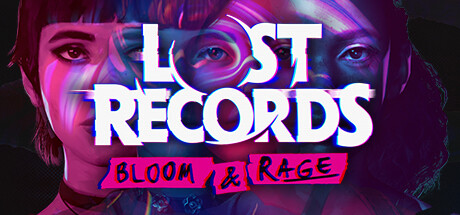
Shares Mystery, Branching Narrative, Mysterious, Dialogue Trees.
Both lean into Single-Player, Campaign, Mystery, Branching Narrative.
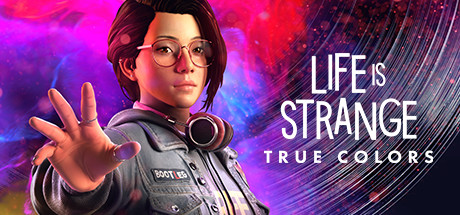
Shares Mystery, Branching Narrative, Dialogue Trees, Supernatural & Occult.
Both lean into Single-Player, Mystery, Campaign, Branching Narrative.
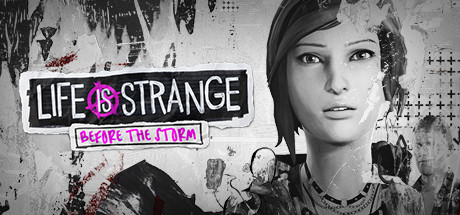
Shares Third-Person, Branching Narrative, Dialogue Trees, Mystery.
Both lean into Single-Player, Campaign, Third-Person, Branching Narrative.
See all games like Life is Strange: Double Exposure →
Closest hidden gems

A lesser-known kindred — Branching Narrative, Dialogue Trees, Mystery, Moral Choice. 90% positive across 4,338 Steam reviews.
Both lean into Branching Narrative, Single-Player, Campaign, Dialogue Trees.
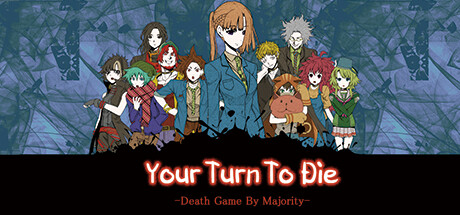
A lesser-known kindred — Branching Narrative, Mystery, Dialogue Trees, Multiple Endings. 98% positive across 4,238 Steam reviews.
Both lean into Single-Player, Branching Narrative, Campaign, Mystery.

A lesser-known kindred — Branching Narrative, Mystery, Dialogue Trees, Mysterious. 98% positive across 4,955 Steam reviews.
Both lean into Branching Narrative, Single-Player, Mystery, Dialogue Trees.