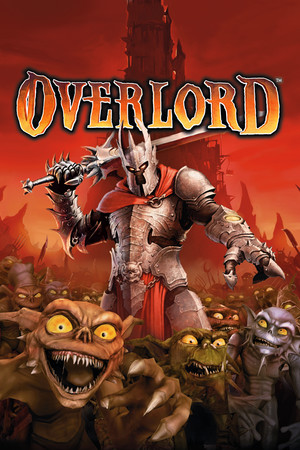
Overlord
Overlord is an action role-playing video game set in an alternate world, where the player takes the role of a resurrected warrior known as "The Overlord" who has control over hordes of gremlin-like creatures known as "Minions". The player must defeat seven corrupt ruling heroes in order to reconquer the lands and establish his lordship over its inhabitants. The game features a corruption feature, similar to that of the Fable games, but allowing the player to "be evil... or really evil", where certain actions and choices affect different aspects of the story and gameplay. While the Overlord is controlled in a third person perspective, the way minions are controlled brings elements of real-time strategy and upgrades bring those of role-playing games. The game uses dark humour, and is a satirical parody of the traditional fantasy setting and plot
What it feels like
Dark humor and satirical subversion of fantasy conventions drive an ironic, mocking tone throughout. The absurdity of playing an evil overlord with mischievous minions invites teasing, experimental gameplay.
What it's about
The central theme explores how power tempts toward despotism and corruption, with mechanics rewarding darker choices. A grim alternate fantasy world of corruption, evil, and the dark power of the Overlord is the setting. The game is an explicit satirical parody of traditional fantasy tropes, heroes, and the quest narrative, told with dark humor.
How it plays
Controlling and commanding squads of minions with different types and roles is central to gameplay and strategy. Fast melee combat against minion hordes and enemy groups is a core moment-to-moment activity for the Overlord. A corruption system allows the player to 'be evil or really evil,' with choices meaningfully affecting gameplay, story, and world state.
How it looks and sounds
The Overlord is controlled in third-person perspective as the core camera mode. The visual style is a dark fantasy world with realistic proportions exaggerated toward a painterly, atmospheric aesthetic.
How it's structured
Designed as a solo experience with no multiplayer component. A bounded authored story arc with defeating seven heroes and reconquering the realm provides a definite narrative endpoint. A story spine of defeating seven corrupt heroes punctuated by explorable territory and optional content creates a guided non-linear progression.
Kindred games

Shares Third-Person, Hack-and-Slash, Dark Fantasy, Party Management.
Both lean into Third-Person, Single-Player, Hack-and-Slash, Dark Fantasy.

Shares Third-Person, Real-Time with Pause, Party Management, Dark Fantasy.
Both lean into Third-Person, Single-Player, Real-Time with Pause, Campaign.
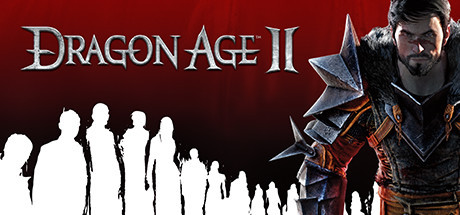
Shares Party Management, Third-Person, Real-Time with Pause, Dark Fantasy.
Both lean into Single-Player, Campaign, Party Management, Third-Person.
Closest hidden gems
A lesser-known kindred — Third-Person, Hack-and-Slash, Dark Fantasy, Party Management. 89% positive across 4,940 Steam reviews.
Both lean into Third-Person, Single-Player, Hack-and-Slash, Dark Fantasy.
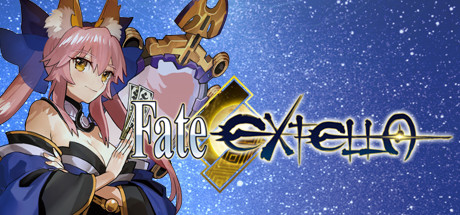
A lesser-known kindred — Hack-and-Slash, Third-Person, Party Management. 91% positive across 4,466 Steam reviews.
Both lean into Single-Player, Hack-and-Slash, Third-Person, Campaign.
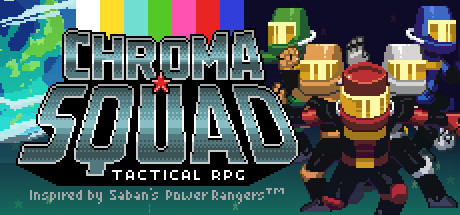
A lesser-known kindred — Party Management, Satire & Commentary, Playful, Character Builds. 93% positive across 4,581 Steam reviews.
Both lean into Single-Player, Party Management, Campaign, Satire & Commentary.