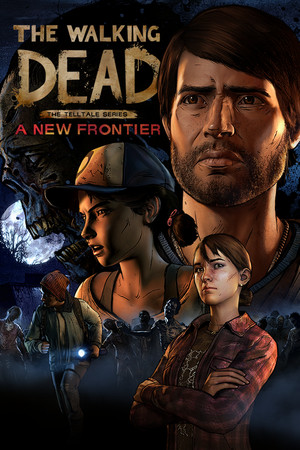
The Walking Dead: A New Frontier
The Walking Dead: A New Frontieris an episodic graphic adventure game based on Robert Kirkman's The Walking Dead comic book series developed by Telltale Games. It is Telltale's third season of its The Walking Dead series. The game employs the same narrative structure as the past seasons, where player choice in one episode will have a permanent impact on future story elements. The player choices recorded in save files from the first two seasons and the additional episode "400 Days" carry over into the third season. Clementine, who was the player's companion during the first season and the player-character in season two returns as a player-character along with another player-character, Javier "Javi" Garcia. The game takes place in the same fictional world as the comic, with the zombie apocalypse having occurred. The main characters of the game are original characters, however due to time skips in season two and between seasons two and three, the timeline is caught up to where the comics are.
What it feels like
A grave, subdued seriousness with the constant hush of threat and mourning pervades the narrative. Sustained pressure from zombie threats and interpersonal conflict creates edge-of-seat tension throughout. A pervasive wistful sadness runs through character loss, fractured families, and the beauty found amid decline.
What it's about
The game is fundamentally set in a zombie apocalypse where undead threats structure the world and narrative. Survival amid the ruins of collapsed civilization is the core setting and central struggle. Enduring a hostile world with scarce resources and constant threats from both undead and other survivors is central.
How it plays
Branching conversation choices drive most interactions and determine character relationships and outcomes. Core interaction is driven by clicking hotspots to examine, interact with objects, and make dialogue selections. Weighty ethical decisions about trust, survival, and sacrifice shape the story and how characters perceive the player.
How it looks and sounds
The game employs a distinctive hand-drawn, illustrated 2D art style with expressive character animation. Visual presentation draws from comic book aesthetics with bold outlines and paneled layouts reflecting the source material.
How it's structured
The episodic story follows a bounded, authored narrative arc with definitive plot progression across five episodes. Designed to be played solo with no multiplayer component. Content is explicitly structured as self-contained episodes released sequentially.
Kindred games

Shares Post-Apocalyptic, Zombie, Episodic, Survival Against Nature.
Both lean into Post-Apocalyptic, Single-Player, Zombie, Episodic.
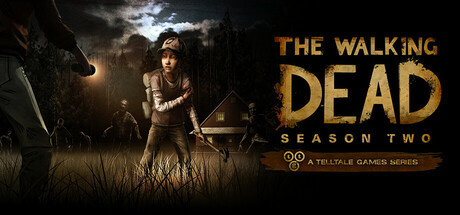
Shares Zombie, Post-Apocalyptic, Dialogue Trees, Point-and-Click.
Both lean into Zombie, Single-Player, Dialogue Trees, Post-Apocalyptic.
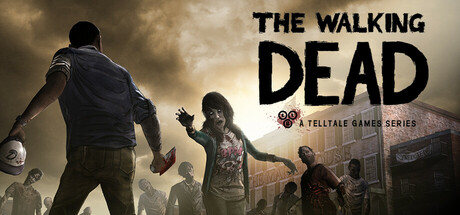
Shares Zombie, Survival Against Nature, Episodic, Dialogue Trees.
Both lean into Zombie, Campaign, Single-Player, Episodic.
See all games like The Walking Dead: A New Frontier →
Closest hidden gems
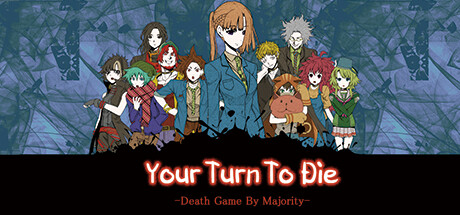
A lesser-known kindred — Branching Narrative, Dialogue Trees, Survival Against Nature, Moral Choice. 98% positive across 4,238 Steam reviews.
Both lean into Single-Player, Campaign, Branching Narrative, Dialogue Trees.

A lesser-known kindred — Dialogue Trees, Branching Narrative, Point-and-Click, Moral Choice. 98% positive across 4,955 Steam reviews.
Both lean into Single-Player, Branching Narrative, Dialogue Trees, Campaign.

A lesser-known kindred — Branching Narrative, Dialogue Trees, Tense, Moral Choice. 90% positive across 4,338 Steam reviews.
Both lean into Campaign, Branching Narrative, Single-Player, Dialogue Trees.