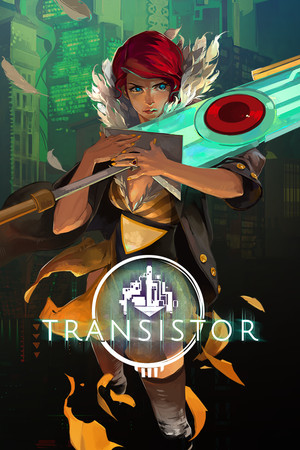
Transistor
Transistor is an action role-playing game presented from an isometric perspective. Players control Red, a singer in the city of Cloudbank, as she wields a greatsword-like weapon called the Transistor against robotic enemies known as the Process. Combat can be played in real-time or paused using a planning mode called Turn(), which allows queuing actions for execution in a burst. Powers called Functions can be equipped in active slots, used as upgrades to augment other Functions, or placed in passive slots for persistent effects. With 16 total Functions available, the system encourages experimentation with different combinations across multiple playthroughs.
What it feels like
The protagonist Red is a silenced singer, and the story carries a wistful sadness about loss and isolation amid the city's gradual transformation. The game invites reflection on themes of identity, agency, and the nature of choice through its narrative and aesthetic presentation.
What it's about
The game is sci-fi-themed with robotic enemies and the city of Cloudbank, evoking a cyberpunk aesthetic despite its isometric, more stylized presentation. The narrative involves uncovering the truth about the Process and what has happened to Red and Cloudbank, with the story unfolding as a mystery to be solved. Red's loss of voice and journey to reclaim her agency explores questions of selfhood and identity throughout the narrative.
How it plays
The Turn() planning mode that pauses combat to queue actions is definitional—it's the primary combat system allowing both real-time and tactical play. The Function system with 16 total abilities that can be equipped actively, used as upgrades, or placed passively creates deep combinatorial character building and experimentation. The Turn() system allows pausing to position, queue, and plan a burst of actions with spatial awareness and timing considerations, supporting tactical play.
How it looks and sounds
The game is explicitly presented from an isometric perspective, which is a fundamental part of its visual identity and spatial design. Supergiant Games is known for sweeping orchestral soundtracks, and Transistor's score is a celebrated core part of its audiovisual identity. Supergiant's signature hand-drawn art style is evident in character and world design, though composited with isometric 3D rendering.
How it's structured
The game is single-player-focused with no multiplayer component, as indicated by Steam features. The narrative follows Red's story in Cloudbank with a clear arc and defined ending, structured as a bounded authored campaign. The 16 Functions encourage experimentation with different combinations across multiple playthroughs, supporting repeated playthroughs with varied builds.
Kindred games

Shares Isometric, Real-Time with Pause, Grid Tactics Combat, Character Builds.
Both lean into Isometric, Single-Player, Campaign, Real-Time with Pause.
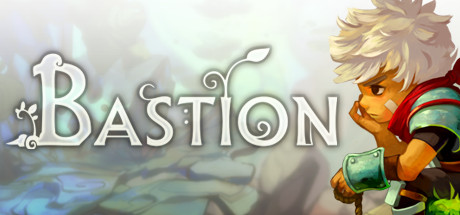
Shares Isometric, Orchestral Score, Hand-Drawn 2D, Melancholic.
Both lean into Single-Player, Isometric, Campaign, Orchestral Score.
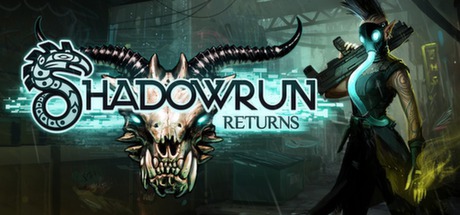
Shares Grid Tactics Combat, Isometric, Cyberpunk, Character Builds.
Both lean into Grid Tactics Combat, Isometric, Cyberpunk, Single-Player.
See all games like Transistor →
Closest hidden gems

A lesser-known kindred — Hand-Drawn 2D, Melancholic, Orchestral Score, Short Playtime. 95% positive across 4,380 Steam reviews.
Both lean into Single-Player, Campaign, Hand-Drawn 2D, Melancholic.

A lesser-known kindred — Grid Tactics Combat, Mystery, Character Builds, High Replayability. 93% positive across 4,703 Steam reviews.
Both lean into Single-Player, Campaign, Grid Tactics Combat, Mystery.

A lesser-known kindred — High Replayability, Melancholic, Mystery, Branching Narrative. 98% positive across 4,955 Steam reviews.
Both lean into Single-Player, Campaign, High Replayability, Melancholic.