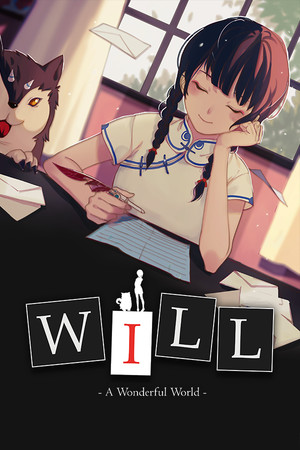
Will: A Wonderful World
Become a god and help change the fate of people, even the world! In Will: A Wonderful World, you will receive letters written by characters living in urban cities. By rearranging the order and combinations of sentences in these letters, you are going to alter the destiny of whomever that wrote them.
What it feels like
The puzzle-solving invites unhurried reflection on consequences, causality, and ethical weight of interventions in other lives. A pervasive wistful sadness pervades the urban setting and the fates of struggling characters facing difficult choices. The mechanic of discovering hidden letter combinations and uncovering character secrets maintains an enigmatic pull.
What it's about
The god-like power to rearrange fate directly engages with questions of determinism, choice, and whether outcomes are truly changed or predetermined. Questions of fate, free will, and the meaning of intervention as a god-like force structure the central conceit. The game engages with death, fate, and finitude as characters face life-altering consequences from the player's interventions.
How it plays
The core interaction is clicking hotspots to examine, select, and rearrange textual elements within letters to solve puzzles and alter outcomes. Player choices in how sentences are rearranged directly fork the narrative into different character fates and story outcomes. Solving puzzles through deductive reasoning about sentence combinations and their logical consequences to alter character destinies is central.
How it looks and sounds
Visual novel aesthetic with illustrated 2D character art and urban environments in a hand-drawn or stylized 2D art direction. The interface centers on text and sparse visual elements, stripping the experience to essential narrative content.
How it's structured
Explicitly designed as a solo experience with no multiplayer component. The rearrangement of letters creates meaningfully different narrative paths and endings for each character. Player choice in how to modify letters allows some degree of agency in the order and combination of events, though within authored constraints.
Kindred games

Shares Point-and-Click, Branching Narrative, Dialogue Trees, Contemplative.
Both lean into Single-Player, Point-and-Click, Branching Narrative, Dialogue Trees.

Shares Point-and-Click, Logic Puzzles, Mysterious, Contemplative.
Both lean into Point-and-Click, Single-Player, Logic Puzzles, Mysterious.
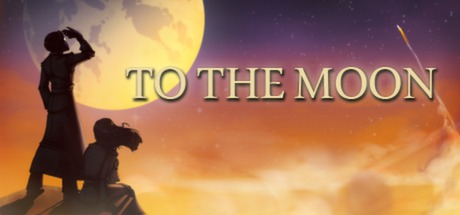
Shares Point-and-Click, Contemplative, Dialogue Trees, Melancholic.
Both lean into Single-Player, Point-and-Click, Contemplative, Melancholic.
See all games like Will: A Wonderful World →
Closest hidden gems

A lesser-known kindred — Melancholic, Branching Narrative, Love & Romance, Contemplative. 87% positive across 4,685 Steam reviews.
Both lean into Single-Player, Melancholic, Branching Narrative, Love & Romance.

A lesser-known kindred — Point-and-Click, Contemplative, Dialogue Trees, Branching Narrative. 90% positive across 4,965 Steam reviews.
Both lean into Single-Player, Point-and-Click, Contemplative, Dialogue Trees.

A lesser-known kindred — Point-and-Click, Contemplative, Melancholic, Love & Romance. 95% positive across 4,380 Steam reviews.
Both lean into Single-Player, Point-and-Click, Contemplative, Melancholic.