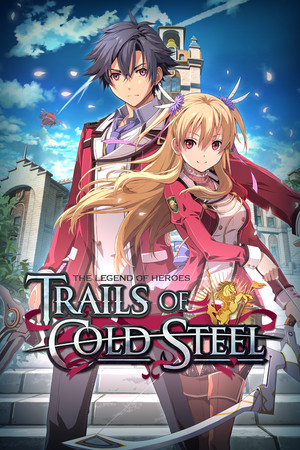
The Legend of Heroes: Trails of Cold Steel
The Legend of Heroes: Trails of Cold Steel is the sixth installment in the main Trails series, serving as the beginning to the Erebonia arc. The game follows Rean Schwarzer and his fellow students of "Class VII" at Thors Military Academy, a newly formed class at the academy which is the only one not segregated by social class, composing of both Erebonian nobility and commoners. The basic gameplay is nearly identical to the previous entries with a few changes. The biggest change to the battle system and also counting as a brand new feature is the "Tactical Link System". The "Tactical Link" allow players follow up with three different kinds of link attacks, dealing additional damage and providing various other benefits. "Tactical Link" becomes a more useful asset to the player as the story progress and characters level up their "Link Levels" with other characters. As the link levels increase, you will obtain new link abilities such as healing the link partner or increase the CP gain of the partner.
What it feels like
The narrative sincerely commits to its emotional beats, character growth, and themes without irony. Despite Erebonia's chaos, Class VII's bonds and determination to protect their country carry an earned optimism.
What it's about
The military academy setting, training focus, and looming national conflict form the central backdrop of the story. Following first-year students through a transformative year at academy, learning both combat and self-identity, is a core narrative arc. The bonds forged within Class VII and their mutual support despite social class differences anchor the emotional core.
How it plays
Turn-based combat is the primary battle system, with alternating character actions as the core loop. Assembling and directing a squad of distinct Class VII characters with different roles is central to tactical combat. Positioning, strategic link system choices, and turn order create tactical depth beyond simple turn-by-turn exchanges.
How it looks and sounds
Japanese anime-inspired character design, visual language, and presentation style define the aesthetic throughout. Major story scenes and character interactions feature voice acting in the original Japanese, enhancing narrative immersion.
How it's structured
The game features a bounded, authored story arc centered on Class VII's journey through their academy year and Erebonia's growing chaos, with a definite narrative conclusion. The core experience is entirely single-player, as confirmed by Steam and developer design. Characters gain experience and rise through numbered levels that gate power and unlock new abilities, a foundational progression system.
Kindred games
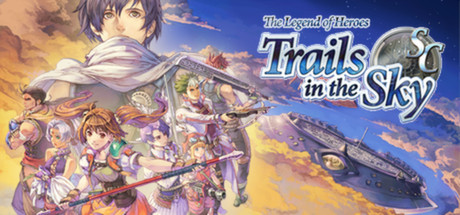
Shares Turn-Based Combat, Party Management, Grid Tactics Combat, Long-Haul Scope.
Both lean into Campaign, Single-Player, Turn-Based Combat, Party Management.
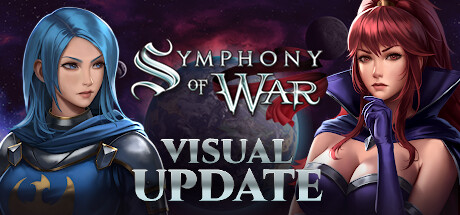
Shares Turn-Based Combat, Grid Tactics Combat, Party Management, Relationship Sim.
Both lean into Campaign, Single-Player, Turn-Based Combat, Grid Tactics Combat.

Shares Turn-Based Combat, Grid Tactics Combat, Party Management, Earnest.
Both lean into Single-Player, Campaign, Turn-Based Combat, Grid Tactics Combat.
See all games like The Legend of Heroes: Trails of Cold Steel →
Closest hidden gems
A lesser-known kindred — Turn-Based Combat, Party Management, Grid Tactics Combat, Long-Haul Scope. 98% positive across 4,325 Steam reviews.
Both lean into Campaign, Single-Player, Turn-Based Combat, Party Management.
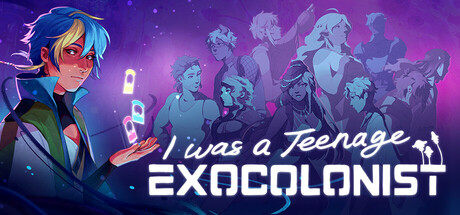
A lesser-known kindred — Coming of Age, Turn-Based Combat, Relationship Sim, Earnest. 96% positive across 4,713 Steam reviews.
Both lean into Campaign, Single-Player, Coming of Age, Turn-Based Combat.

A lesser-known kindred — Coming of Age, Friendship, Dialogue Trees, Relationship Sim. 92% positive across 4,619 Steam reviews.
Both lean into Campaign, Single-Player, Coming of Age, Dialogue Trees.